Programme

Membrane Trafficking in Health and Disease: Focus on Neurological Diseases

Regulated and unconventional exocytosis, the role of lysosomes in degradation and secretion, the dynamics, metabolism and signalling of lipids, and the role of the immune system in regulating the synapse and neuronal function.
https://mthd.lakecomoschool.org/

In the last thirty years, tremendous progress has been made in the elucidation of the molecular and cellular mechanisms regulating membrane trafficking and turnover in mammalian cells, e.g., exocytosis, endocytosis and the lysosomal clearance of proteins and lipids through autophagy. The field is now able to explore how defects of membrane trafficking can lead to diseases, particularly neurodevelopmental and neurodegenerative disorders. The school will overview the last decades of seminal advances in the field: the lessons learned about regulated and unconventional exocytosis, the role of lysosomes in degradation and secretion, the dynamics, metabolism and signalling of lipids, and the role of the immune system in regulating the synapse and neuronal function.

Program

Day 1. Monday 14th

11-12. welcoming

13.00. Lunch

Secretion and degradation I

14:30. Thierry Galli: “Unconventional Secretion in the Nervous System”

16:00. Silvia Coco: “Mesenchymal Stem Cell Extracellular Vesicles: A New Challenge for Brain Diseases?”

Social Dinner.


Day 2. Tuesday 15th

Membrane Trafficking and neurodegeneration

9:00. Shawn Ferguson: “Lysosome Dysfunction in Neurodegenerative Disease”

10:30. Peter McPherson: “DENN-Domain-Mediated Regulation of Rab GTPases in Neurological Disease

Social Event: Visit of Como and Museum

13.30. Lunch

Membrane dynamics at the synapse

14:30. Kohji Takei: “Interplay between Membrane Dynamics and Cytoskeletal Dynamics”

16:00. Ira Milosevic “Towards understanding synaptic transmission in the ageing brain”


17:15. Coffee Break

17:30. Student Session I


Day 3. Wednesday 16th

Secretion and degradation I

9:00Michele Solimena: “Secretory Granules/Large Dense Core Vesicles: The Other Side of Regulated Exocytosis. Lessons from the Pancreatic Islet Beta Cells””

10:30. Roberto Zoncu: “Lysosomes in Nutrient Sensing and Cellular Growth Control”

Social Event: visit of the Villa of Grumello and botanical Garden

13.30. Lunch

Membrane Trafficking and neurodegeneration II

14:30. Volker Haucke: “Lipid Switches in Cell Physiology: From Membrane Dynamics to Disease”

16:00. Gilbert Di Paolo: “Role of Lipids in Neurodegeneration”

17:15. Coffee Break

17:30. Student Session II


Day 4. Thursday 17th 

Neuroimmunology

9:30. Michela Matteoli: “The Synapse as a Target of the Immune System: Role of Microglia”

10:30. Evelina Gatti: “Unconventional Secretion Linking Cellular Stress and Innate Sensing: Lessons for the Neuroimmune Dialogue”

Social Event: Sailing on the lake

Lunch

16:30. Davide Pozzi: “The Synapse as a Target of the Immune System: Role of Cytokines”


Day 5. Friday 18th

10:00. Keynote Lecture: Pietro De Camilli.

Introduced by Prof. Maria Paola Canevini

11:00. Final discussion with all speakers and students

13:00. Lunch

Departure


Horaires
9-17:30
Lieu
The School is housed in Villa del Grumello, Como, which is set in a park over Como lake.
Public cible
Students, Postdoc, researchers

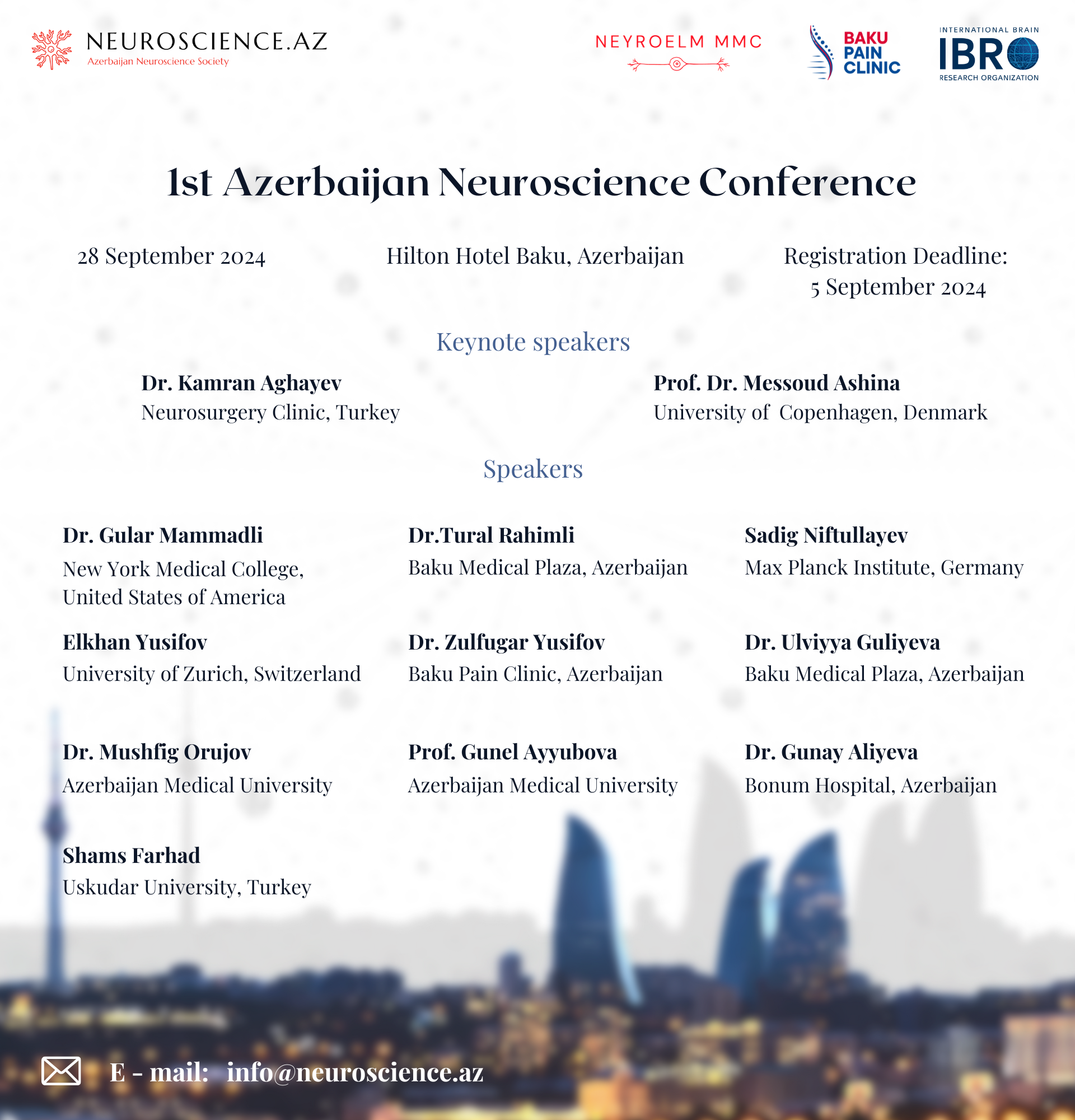
1st Azerbaijan Neuroscience Conference

The 1st Azerbaijan Neuroscience Conference, organized by the Azerbaijan Neuroscience Society in collaboration with Neyroelm MMC, IBRO and Baku Pain Clinic, will take place on September 28th, 2024, at the Hilton Hotel in Baku, Azerbaijan.

More information on the event website


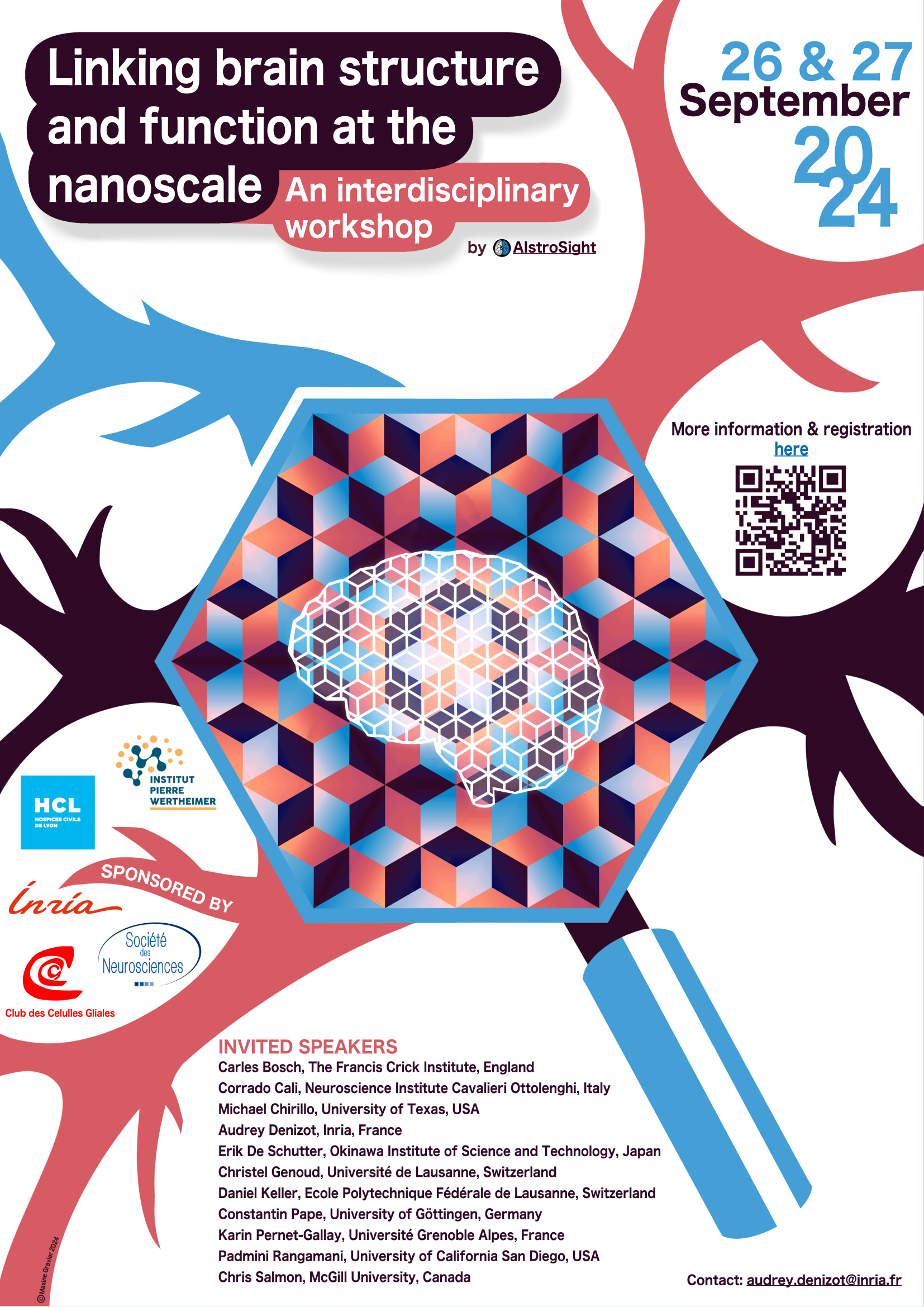
Workshop « Linking brain structure & function at the nanoscale: an interdisciplinary workshop »

The brain is composed of various specialized cells, characterized by complex, nanoscopic shapes. Recent technical advances such as cryo- and volume electron microscopy have enabled reconstructing cells and organelles at unprecedented spatial resolution, paving the way for new discoveries on cell structure-function coupling at the subcellular level.
This interdisciplinary workshop aims to bring together experts from diverse fields who contribute to improving our understanding of the nanoscale landscape of the nervous system and its impact on brain function, from electron microscopy to image analysis, machine learning, deep learning, and computational modeling.

More information on the event website.

Registration


Lieu
Lyon et hybride

2024 ISDN meeting

The 25th Biennial Conference of the International Society for Developmental Neuroscience (ISDN) will take place in Montpellier, France, 21-24 September 2024.

4 plenary speakers and 10 symposia featuring more than 40 speakers will highlight recent advances and future directions in fundamental and applied developmental neuroscience.

Program

Registration

Lieu
Corum, Montpellier, France

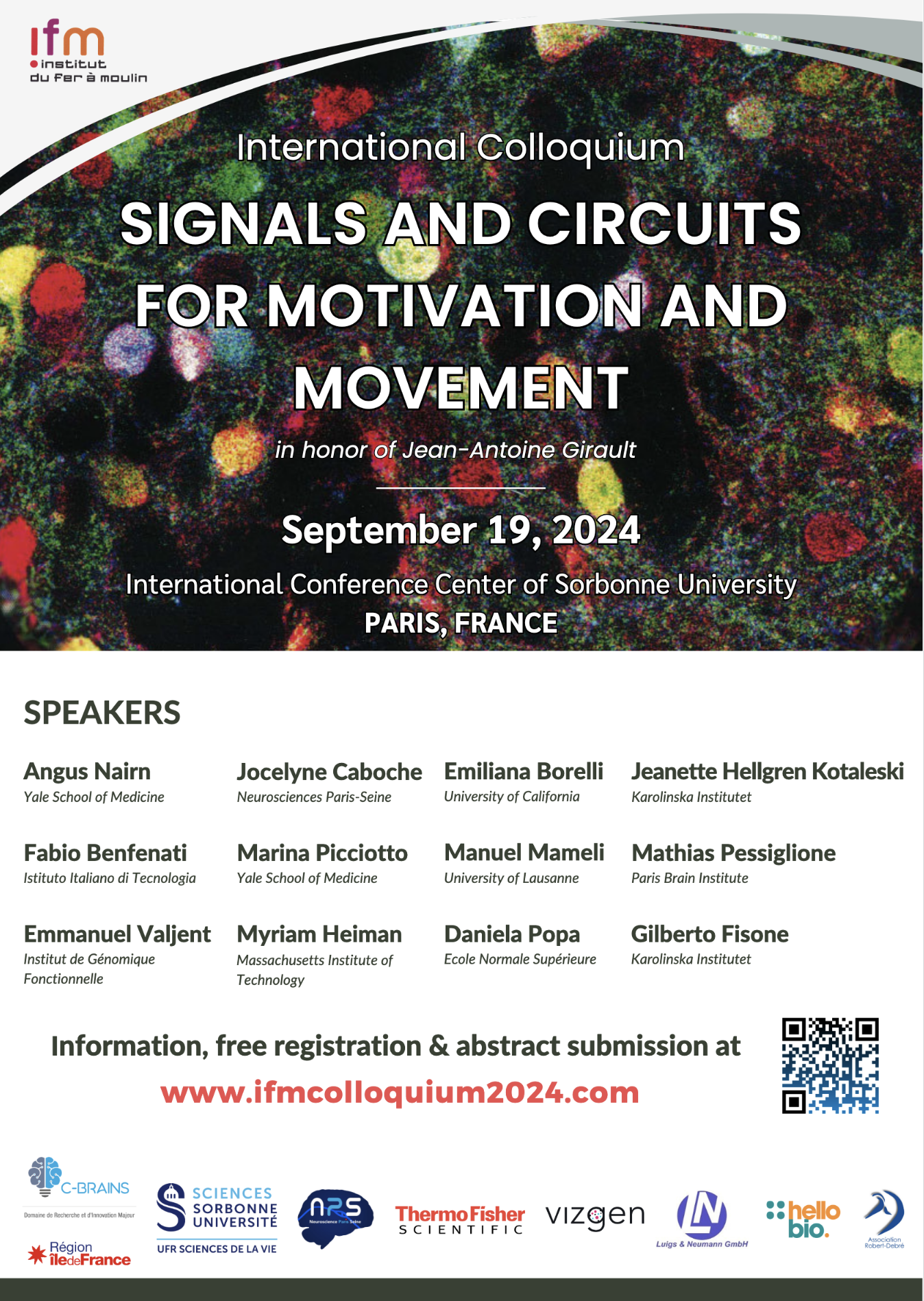
International Symposium: Signals and Circuits for motivation and movement

Dopamine is an important neurotransmitter in the brain that modulates complex behaviors such as movement, reward, motivation, and memory. The activity of dopaminoceptive neurons in the forebrain is altered in a variety of conditions, including Parkinson’s disease, addiction, and schizophrenia.
Unraveling the molecular signals and circuits involved in the actions of dopamine in the normal and pathological brain has been the focus of Jean-Antoine Girault’s scientific career, collaborating with prominent international leaders and making seminal discoveries in this rapidly expanding field.

The 2024 IFM Colloquium, organized in honor of Jean-Antoine Girault’s career, will showcase 12 keynote speakers who will address various aspects of neurotransmission and signaling in the striatal circuits underlying motivation and movement, both in physiological conditions and in various disorders that mainly affect dopaminergic signaling (e.g., Parkinson’s disease, obsessive-compulsive disorder, or drug addiction). Our goal is to cover most aspects of basal ganglia involvement in action selection and procedural learning (i.e., habit formation), as well as related disorders, to provide a comprehensive and up-to-date view of this dynamic field.

Space and time will be allocated to poster presentations.


More information & registration


Lieu
Auditorium - International Conference Center Sorbonne Université - Faculté des Sciences et Ingénierie Campus Pierre et Marie Curie 4 place Jussieu, 75005 Paris

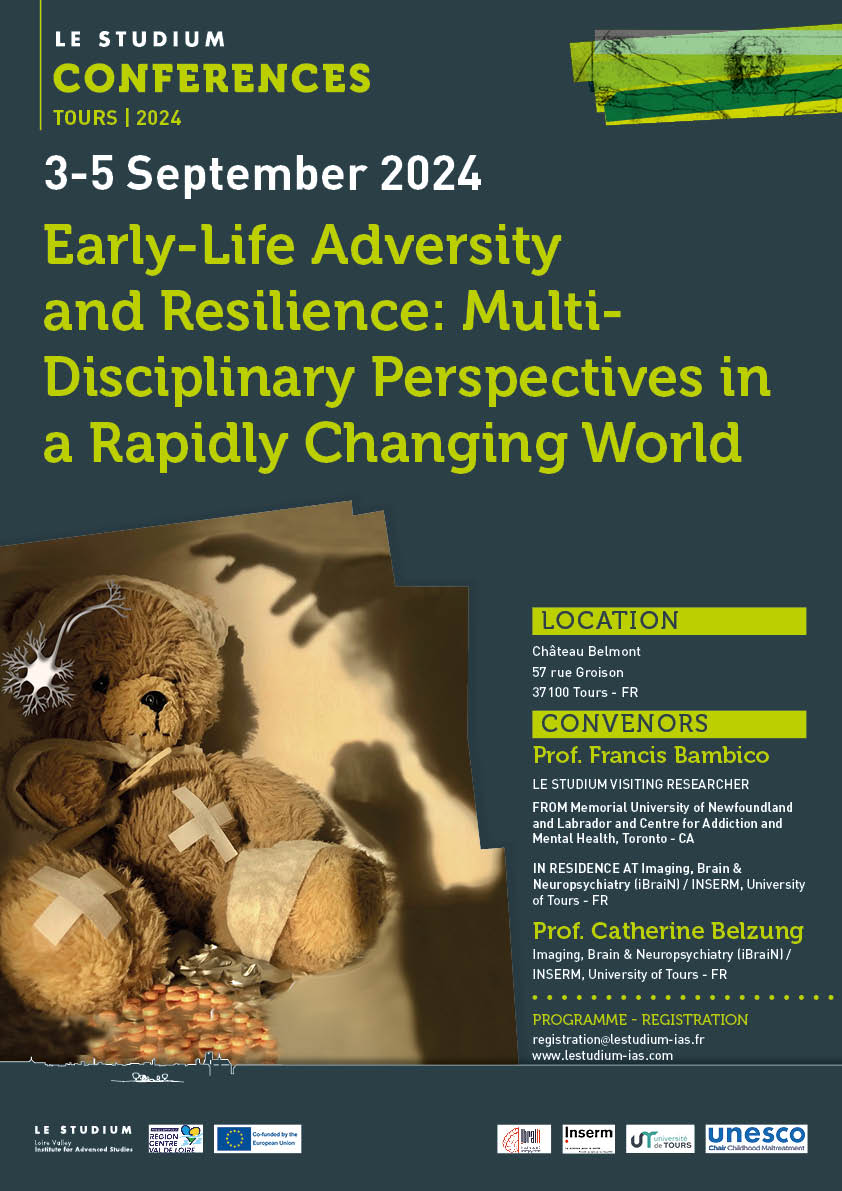
Early-Life Adversity and Resilience: Multi-Disciplinary Perspectives in a Rapidly Changing World

This multidisciplinary conference will bring together experts in various fields in early-life adversity and children’s/youth mental health and well-being. Neurobiologists will focus on the pathogenesis and pathophysiology of early-life adversity, vulnerability and resilience and related psycho-affective disorders. They will highlight the social and clinical implications of their studies investigating the effects of stress-related and other biological factors during the critical period. Specialists in the psychological and clinical domains will bring their professional experience from their work with children and youth-related programs. Educators and policy-makers will discuss practical and logistical considerations in implementing pro-development and mental health awareness programs at the community and societal levels. This conference is a unique opportunity that provides space for inter-disciplinary dialogue. It hopes to bring to the panel diverse perspectives that can mutually inform each other and collectively forge broadly received recommendations and plan of action to address the growing concerns regarding the global youth mental health crisis. These resolutions aim to contribute to a wider movement that works towards a better integrated vision of a future world able to better protect the well-being of children and youth.

Deadline for registration: 31/07/2024

More information


Lieu
Tours

Summer School « Innovations : Neurosciences en secteur public et privé »

Cette Summer School est spécialement conçue pour les étudiants de Master 2, les doctorants, les post-doctorants ainsi que les chercheurs en Occitanie, région riche en potentiel neuroscientifique. Elle vise à compléter leur formation essentiellement axée sur les matières scientifiques en leur apportant des compétences entrepreneuriales et en élargissant leur réseau professionnel.

Chaque matin, les participants auront l’opportunité d’assister à des conférences animées par des chercheurs en neurosciences, ainsi que par des neurologues. Ces exposés permettront d’explorer les dernières avancées dans le domaine, en conjuguant les approches du secteur public et privé. Des chercheurs du réseaux NeurATRIS et hors Neuratris seront présents pour permettre aux étudiants d’Occitanie l’accès à des speakers auxquels ils n’auraient pas accès dans leur cursus classique régional.

L’après-midi sera consacré à des témoignages inspirants et à un accompagnement pratique vers la création de start-ups, la mise en place de CRO (Organisations de Recherche Clinique) et la valorisation des brevets. Des experts partageront leurs expériences et leurs conseils pour aider les participants à concrétiser leurs idées innovantes dans le domaine des neurosciences.

De plus, un atelier dédié à la « Communication Scientifique » sera animé par Elodie Chabrol, une ancienne neuroscientifique spécialisée dans la communication scientifique. Ce module transversal permettra aux participants d’acquérir une compétence essentielle pour leur carrière, que ce soit dans le secteur public ou privé.

Programme et inscription

Lieu
Université de Nîmes, site Vauban
Public cible
Étudiants de Master 2, doctorants, post-doctorants, chercheurs

1er colloque FAAST de France Alzheimer et maladies apparentées

L’association France Alzheimer et maladies apparentées organise son premier colloque annuel sur la recherche. Il a pour objectif d’offrir un rendez-vous annuel autour des thématiques de recherche à la communauté scientifique française.

Cette année, le colloque se tiendra le lundi 3 juin à la Maison de la Chimie à Paris, de 9h à 17h30.

Les inscriptions et l’appel à communication sont encore ouverts : https://faast.sciencesconf.org/

Un tour d’horizon de la recherche dans le domaine de la génétique et des biomarqueurs vous sera présenté au cours de deux séances plénières avec :
-Jean-Charles LAMBERT, directeur de recherche INSERM à l’Institut Pasteur de Lille ;
-Sylvain LEHMANN, professeur de médecine et directeur de l’Institut des Neurosciences de Montpellier

Des bourses de mobilité peuvent être offertes aux étudiants souhaitant participer à l’évènement (sous conditions).


Horaires
9h-17h30
Lieu
Maison de la Chimie, Paris

Journées Thématiques 2024

Les prochaines journées thématiques de la Société des Neurosciences auront lieu les 23 et 24 mai 2024 à Bordeaux, sur le thème de l’Intelligence Artificielle.

Plus d’informations


Lieu
Amphithéâtre Broca, Bordeaux, Nouvelle-Aquitaine